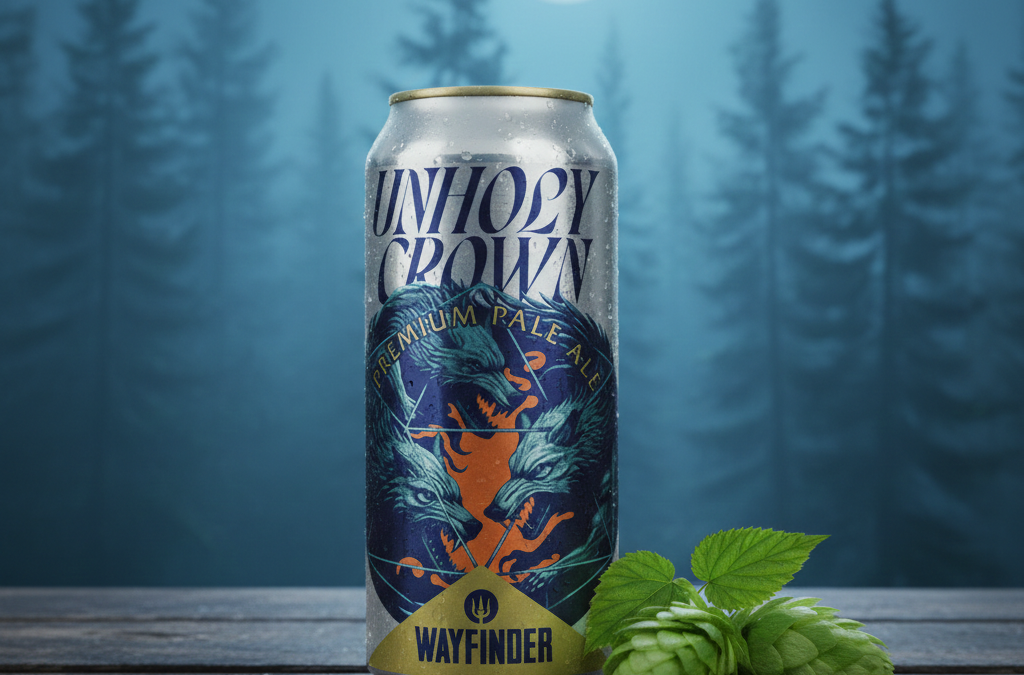
Beer Review: Wayfinder Beer – Unholy Crown Pale Ale
Location: Portland, OR
Style: West Coast Pale Ale
ABV: ~5.2% (Varies by batch)
Wayfinder is often hailed as the “Lager King” of the Pacific Northwest, but its approach to ales is just as surgical. Unholy Crown is a love letter to the era when Pale Ales were defined by their snap and their “C-hop” aromatics, rather than fruit puree or lactose. It is a beer of incredible discipline: clean, bright, and unapologetically bitter.
The Pour
This beer is a visual palette cleanser. It pours a deep, radiant gold—not quite copper, but with enough depth to suggest a solid malt backbone. It is crystal clear, a hallmark of Wayfinder’s meticulous cellar work, topped with a frothy, rocky head that leaves “shattered glass” lacing all the way down the glass.
The Aroma
The nose is a throwback in the best way possible. Instead of the tropical “juice box” profile, you get a punch of classic pine resin and ruby red grapefruit. There’s a beautiful floral note—think dried jasmine or wildflower honey—and a toasted cracker scent from the malt that lets you know this beer has structure.
The Flavor Profile
Unholy Crown is all about the “bite.”
Initial Impression: A quick flash of honey-soaked biscuit and toasted grain that disappears almost instantly.
The Hop Transition: The bitterness arrives early and stays late. It tastes like fresh citrus zest and crushed pine needles. There is a distinct “green” herbal quality that feels forest-fresh.
The Finish: Extremely dry. Wayfinder likely treats its water to ensure a crisp, mineral finish that brings out the hop oils. There is no lingering sweetness here, just a clean, resinous tingle.
The Verdict
In a world of “Hazy-this” and “Pastry-that,” Unholy Crown feels like a revolutionary act. It’s a beer for people who miss the classic West Coast Pale Ales of the early 2010s but want them executed with the precision of a 2026 master brewer. It is balanced, lean, and incredibly “crushable.”
Quick Take: This is a “brewer’s beer.” It’s technically perfect, refreshingly bitter, and reminds you why Pale Ale was the style that started the craft revolution in the first place.
Available at SF Tequila Shop

Exploring the dynamic craft beer scene of San Francisco, one pint at a time. From hoppy IPAs to rich stouts, we’re dedicated to uncovering the best local brews. We believe in the power of community and the unique stories behind every bottle. Our mission is to share our passion for craft beer with the Bay Area and beyond.